English| EUR
Suggested for you
More currencies
Choose a language
Patong Beach hosts Phuket's busiest parasailing corridor, with a dozen competing operators stretched along the three-kilometer strand. This guide identifies which vendors hold proper licensing, what flights actually cost after negotiation, and why your launch time matters more than the operator you choose.
Quick answer
Parasailing operators at Patong Beach work daily from 08:00 to 19:00, with beach access free and flight costs negotiated on-site rather than fixed. Winds calm between 08:00 and 10:00, delivering the steadiest ascents before midday gusts arrive.
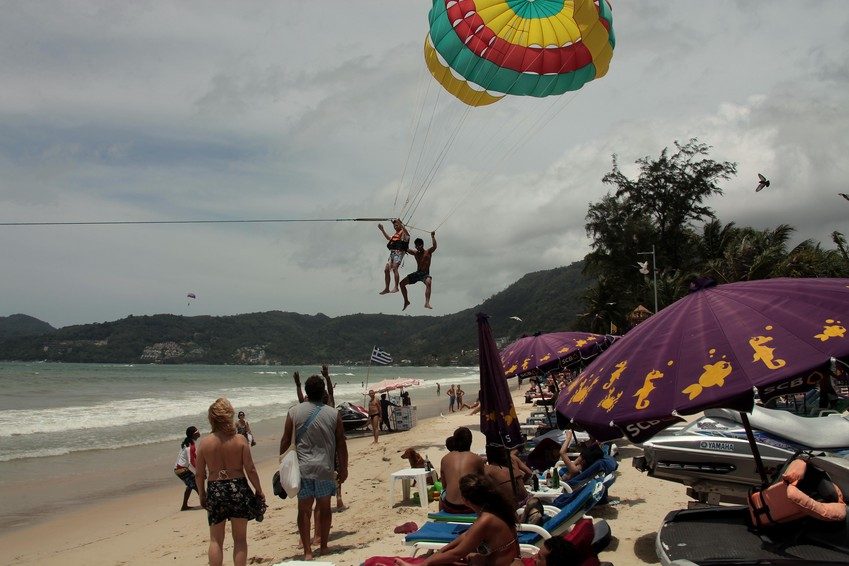
Patong's parasailing trade operates without central booking—vendors work directly from beach stations, competing for walk-up customers along the same stretch of sand. Every operator uses similar equipment: a speedboat tow system, 30-meter lines, and tandem harnesses rated for two adults. What separates a smooth flight from a chaotic one is the boat crew's experience reading wind shifts and the timing of your launch relative to tide and traffic. The beach opens at dawn, but parasailing runs begin around 08:00 once boat crews complete safety checks. Early slots between 08:00 and 10:00 offer the calmest conditions—offshore breezes stay light, the Andaman Sea lies flat, and fewer boats compete for airspace. By midday, thermal winds kick in, creating chop that makes landings harder and ascents bumpier. Late afternoon sees another calm window, though fading light limits operational hours. Negotiation defines pricing. Avoid operators who rush the safety briefing or skip the life-jacket check; legitimate vendors spend three to five minutes fitting harnesses and explaining hand signals. The flight itself lasts 10 to 15 minutes: a gradual winch-up to 80 meters, a sustained glide over turquoise water, and a controlled descent back to the boat deck. Patong's density means you share the sky with jet skis, banana boats, and other parasails. Collisions are rare but possible when multiple operators crowd the same launch zone. Observing how a crew manages their airspace—waiting for clear lanes, signaling to nearby boats—tells you whether they prioritize safety or throughput. The Andaman's warm water and forgiving conditions make Patong an accessible entry point for first-time fliers, but the experience depends entirely on the professionalism of the crew you hire.
“The flight itself lasts 10 to 15 minutes: a gradual winch-up to 80 meters, a sustained glide over turquoise water, and a controlled descent back to the boat deck.”
The best arrival window is 08:00–10:00, which offers calmer water conditions and smaller crowds before the heat of the day. Choosing this timeframe ensures a smoother experience for parasailing at Patong Beach.
Dry, sunny, 28°C–32°C. Ideal conditions for regular flight operations.
Occasional rain, 25°C–30°C. Winds can cause temporary operational pauses.
—
Reduced wait times and calmer coastal winds provide a stable environment for parasailing.
Verdict: The optimal time to visit is during the high season months of November to April, specifically arriving between 08:00–10:00 on weekdays.
Access to Patong Beach is free of charge for all visitors. The cost for parasailing activities is not fixed and depends on on-site negotiation with independent vendors.
Choosing a location for parasailing in Phuket depends on your preference for central convenience or a quieter coastal atmosphere. This comparison helps you weigh the environmental differences between Patong, Karon, and Kata beaches.
| Patong Beach Central Hub Recommended | Karon & Kata Beaches Coastal Quiet | |
|---|---|---|
| Beach Vibe | High-energy urban shoreline | Relaxed resort environment |
| Crowd Density | High volume of visitors | Moderate pedestrian flow |
| Service Availability | High frequency of operators | Limited operator presence |
| Activity Typicality | Standardized commercial parasailing | Niche recreational parasailing |
Verdict: Select Patong Beach for maximum service frequency and accessibility, or choose Karon or Kata if you prioritize a lower-density environment.
Parasailing at Patong depends on sea and wind conditions that change through the day, and on what you and the boat crew agree before you leave the sand. Most problems here trace back to one of those two things going unchecked.
Skipping the weather and wind check before heading down
Look at the marine forecast and the surf that morning. Choppy water, strong onshore wind, or a red flag on the beach means operators may suspend flights, so keep a backup day in mind.
Arriving at midday when wind and crowds peak
Aim for the 08:00–10:00 window, when conditions are calmer and queues are shorter. Later in the day the sea breeze builds and waiting times stretch out.
Agreeing to a flight without confirming what is included
Settle the details on the sand first: flight duration, whether a crew member rides tandem with you, solo or double seat, and whether photos are part of the deal or charged separately.
Assuming insurance and equipment standards are covered
Ask the operator directly about liability cover and look at the harness, straps, and canopy before boarding. Walk away if the gear looks worn or the crew cannot answer.
Bringing phones, cameras, or loose valuables on the flight
Leave anything unsecured with a companion on the beach. Items dropped mid-flight land in open water and are not recoverable.
Booking on the spot with no written or agreed terms
Use the site's booking pages to lock in a vendor and flight details in advance, so the terms are set before you reach the water's edge.
Everything you need to know about parasailing phuket patong beach
The best arrival window is between 08:00 and 10:00 to enjoy calmer crowds and better water conditions. Visiting during these early morning hours helps you avoid the peak heat of the afternoon.